
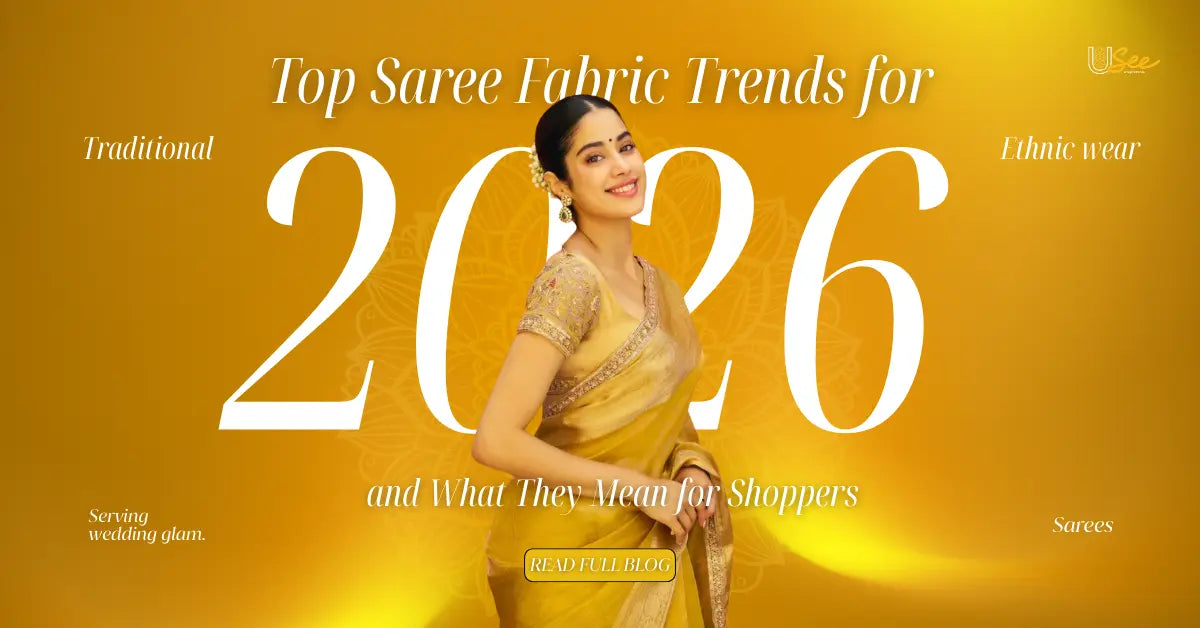
Top Saree Fabric Trends for 2026 and What They Mean for Shoppers
Not very long ago, saree shopping started and ended with colour and design. If the shade matched the occasion and the pattern looked appealing, the decision was mostly done. That approach is quietly fading. In 2026, saree buyers are asking different questions. How does the fabric feel after three hours of wear? Will it crease badly? Can it be worn again for another function? Will it still look good after a year?
At The Usee Shop, this shift shows up in daily conversations with customers. Fabric has become the starting point. Comfort, repeat usability, and long-term value now guide the buying process far more than surface appearance.
Here is what is shaping saree fabric choices in 2026 and how these trends affect your own wardrobe decisions.
Lightweight Silks Are Redefining Everyday Luxury
In conversations with buyers, certain names keep coming up again and again. Katan silk for its clean finish. Soft Banarasi silk for its balanced fall. Tussar blends for their easy feel. Organza for its crisp presence. What all of them have in common is simple. They look rich, but they do not make the wearer feel restricted or uncomfortable the way older heavy silks often do.
For most women today, this shift has been a relief. It finally feels possible to look well dressed and stay comfortable through the entire event, not just for the first few photographs.
The idea behind this range of lightweight silks is simple. Keep the richness and identity that make Banarasi sarees special, but make sure the fabric still feels practical enough to be worn for real occasions, not just stored for special ones.
For shoppers who want this balance, the Banarasi Silk Sarees Collection at The Usee Shop offers a strong starting point. These sarees hold their structure, drape cleanly, and stay comfortable even during long functions.
Organza Has Settled in as a Core Wardrobe Fabric
Organza has become popular for a very practical reason. It gives the saree a clean, defined look, but when you actually wear it, the fabric feels far lighter than the appearance suggests.
Whether it is zari, embroidery, or woven detailing, organza carries surface work in a way that stays visible and crisp. The saree keeps its shape, the patterns remain clear, and the overall look comes across well both in person and on camera.
This is why organza shows up so often at engagement ceremonies, receptions, festive gatherings, and pre-wedding functions. It suits people who want something current in appearance but still connected to traditional dressing, making it appealing across age groups.
The Organza Silk Saree Collection reflects this growing preference, offering styles that work across occasions while staying easy to wear.
Comfort Blends Are Becoming Everyday Essentials
Another clear shift this year is toward blended fabrics that are built around comfort. These sarees sit in a middle space. They carry the look of premium wear, but behave like practical clothing once you actually put them on.
Silk cotton, viscose Tussar, satin silk, and modal silk are among the most requested fabrics in this category. They drape smoothly, crease less, and stay breathable, which matters when events stretch over many hours.
Working professionals, young brides, resellers, and boutique buyers are all driving demand here. They want sarees that move easily with the body and remain comfortable from morning ceremonies to late evening gatherings.
If your wardrobe needs pieces that feel polished without demanding effort, the Everyday and Party Wear Sarees Collection is designed around this exact requirement.
Handloom Fabrics Are No Longer Limited to Special Occasions
Many shoppers now gravitate toward handwoven sarees after noticing how differently they behave over time. The texture stays natural, the weave does not loosen easily, and the surface finish remains steady even after repeated wear. These are the kind of details that machine production still struggles to match.
Because of this, interest continues to grow around handloom Banarasi pieces, Jamdani work, Kora silk, and traditional Kadhwa weaving. Buyers are learning that these fabrics do not simply look good on day one. They continue to hold their presence for years.
Although handloom sarees may cost more at the time of purchase, many buyers find that they remain wearable and presentable long after factory-made pieces begin to lose their shape or surface finish.
Handloom is now viewed as a reliable investment, not only a heritage choice.
Sustainable Fabrics Are Shaping Purchase Decisions
Conversations around sustainability are no longer limited to designers and marketing teams. Shoppers themselves now raise these questions while choosing their sarees. Where was this woven? What kind of dyeing process was used? Will this fabric last or start fading quickly?
For most buyers, the goal is not just to follow trends, but to slowly build a collection of sarees that continue to feel right and usable year after year.
Pure silk handloom, natural dyed cotton, low-chemical processed weaves, and long-life premium fabrics are seeing steady growth in interest. People are not only buying a look. They are buying confidence in what they own.
Everyday Sarees Are Expanding the Market
One of the biggest changes in 2026 is how often sarees are being worn. They are no longer limited to weddings and festivals.
Soft cotton, silk cotton, light Banarasi silk, and viscose blends are now everyday wardrobe staples. Women are wearing sarees to work, to social lunches, to family events, and to smaller celebrations that do not require heavy festive dressing.
For those starting out or planning a practical everyday collection, the Sarees Under 2000 Collection provides options that remain comfortable and usable without stretching the budget.
This everyday shift has made saree shopping far more flexible and personal.
How Shoppers Are Choosing Sarees in 2026
When shoppers talk about how they decide, the pattern is usually the same. They start by feeling the fabric, noticing how the saree falls on the body, and only then think about how long it will stay in good condition. Price and design come into the picture after that.
This way of choosing keeps wardrobes from filling up with pieces that look nice once but rarely get worn again.
If you are still figuring out your own shopping process, our earlier guide on buying your first saree online breaks this down in a simple, practical way and fits naturally with this fabric-first approach.
Closing Thoughts
The saree market in 2026 is no longer driven by surface beauty alone. Comfort, fabric behaviour, longevity, and real-life wear have become just as important.
Choosing fabric with care simply makes everyday dressing easier. Over time, your collection begins to reflect your routine, your comfort, and the way you actually live, which is what sensible saree buying has come to mean for many shoppers now.

Written by Kreative Catalyst


Leave a comment
This site is protected by hCaptcha and the hCaptcha Privacy Policy and Terms of Service apply.